Axlevara · guide range
Throwout bearing symptoms: the noise and pedal checks
A throwout (clutch release) bearing that is noisy with the pedal down and quiet with it up: the checks that separate bearing wear from clutch and gearbox faults.
- Range
- Release bearing symptom checks
- Catalogue
- Mechanical and hydraulic families
- Reference
- Pedal-position tests first
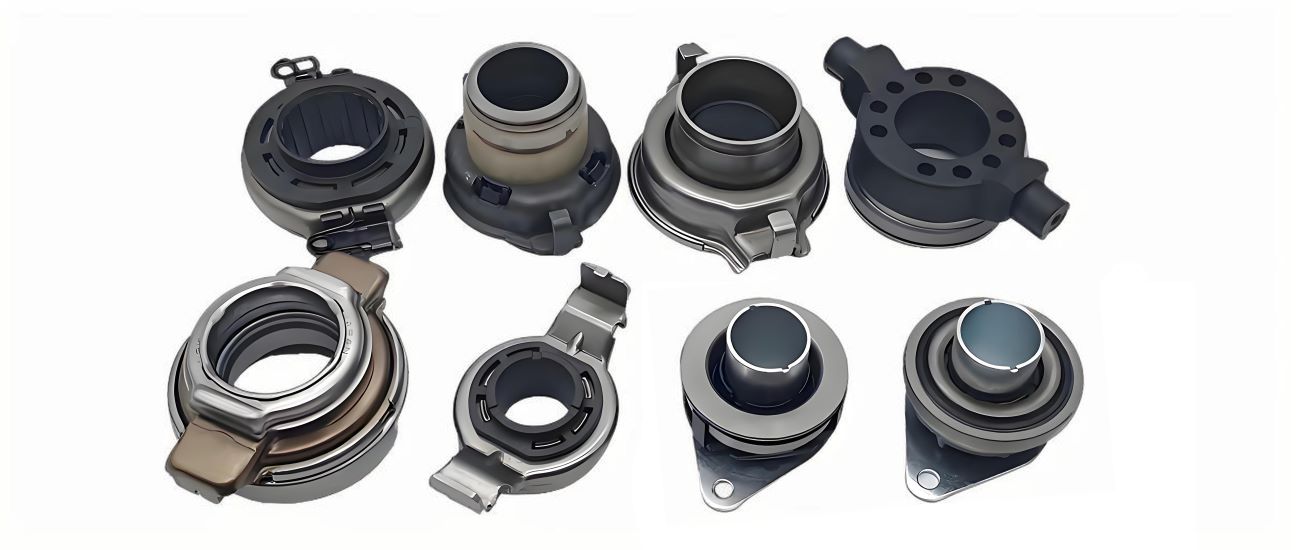
The pedal-position test comes first
The throwout bearing — the clutch release bearing under its trade name — only works when the pedal is pressed. That gives the trade its sharpest test: a noise that appears or changes as the pedal goes down, and fades when the pedal is released, is a release-side noise. A noise that is present with the pedal up and disappears as it is pressed belongs to the gearbox side instead. Half of all release bearing orders are settled by that one distinction.
The symptom patterns
A worn release bearing growls, whirs or chirps under pedal load, and the sound worsens as the bearing's grease dries and its races pit. A bearing that has begun to seize adds pedal judder and, eventually, damage to the diaphragm fingers it rides on — which is why a noisy bearing is a replacement, not a monitoring item.
| Test | Release bearing sign | Points elsewhere if |
|---|---|---|
| Press the pedal slowly | Noise starts as load begins | Noise unchanged |
| Hold the pedal down | Growl or whir continues | Noise stops under full load |
| Release the pedal | Noise fades away | Noise begins (gearbox side) |
| Pedal feel | Roughness through the pedal | Smooth but heavy (clutch wear) |
Mechanical and hydraulic present alike
The symptom does not care which family is fitted. A mechanical release bearing and a hydraulic CSC unit both announce wear at the pedal; the difference is in the replacement, not the diagnosis. Confirm the actuation type before ordering — the family pages show the fork-and-line checks that separate them — because the two parts are not substitutes.
What else imitates a release bearing
A dry release fork pivot can squeak in time with the pedal; a worn clutch disc's damper springs can rattle at the bite point; a gearbox input bearing fails the pedal test in the opposite direction. The pedal-position pattern, taken with the noise's character, separates the bearing from its imitators in most cases.
Ordering after the checks
Quote the application and, where it exists, the cross-reference number, and state the actuation type the checks found. A distributor whose customer reports the pedal pattern can order with confidence from either family page; a customer who reports only 'clutch noise' should be asked the pedal question first.
One more distinction is worth making on the inquiry: whether the bearing is being replaced alone or with the clutch. A bearing ordered alone is matched strictly to the existing clutch; a bearing ordered as part of a clutch job can be matched to the new clutch's application where the two differ. Saying which job the part is for takes a line and prevents the subtlest release-bearing error — the right bearing for the old clutch, fitted to a new one it does not suit.
For the counter: a thirty-second version
Pedal down, noise on; pedal up, noise off — release bearing. Pedal up, noise on; pedal down, noise off — look at the gearbox. Noise under both, changing with neither — look beyond the clutch entirely. That is the whole diagnostic in the form a counter can use, and the sections above are its working-out.