Axlevara · compare range
Timing belt kit or timing chain kit: confirm the drive
An engine is built with a timing belt or a timing chain, never both. How the two kit families differ and how to confirm which one an engine uses.
- Range
- Belt kits versus chain kits
- Catalogue
- Two kit families, two engine drives
- Reference
- The engine settles the question
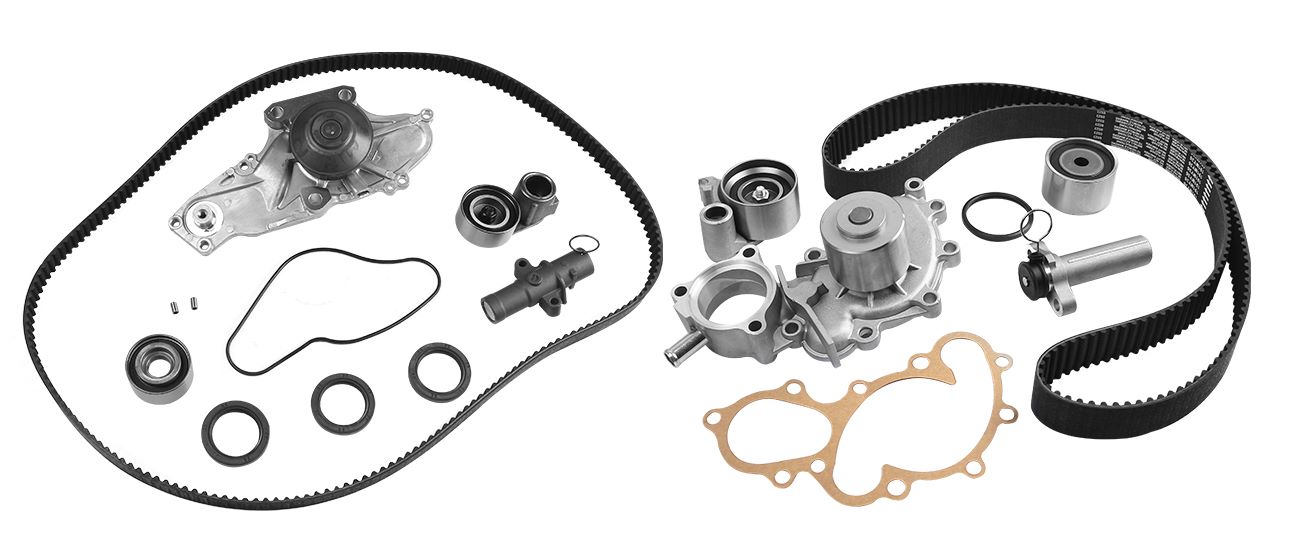
Not two options for one engine
Buyers sometimes ask which kit is 'better' for an engine, as if belt and chain were alternatives on a shelf. They are not. An engine is designed around one drive: the crankshaft turns the camshafts by a toothed belt on one engine and by a roller chain on another, and the kit families follow that design exactly. The only real question is which drive the engine in front of you uses.
The two families side by side
Both kits are complete repair-accessory sets for one engine job, but the wear logic differs. A belt drive is a scheduled-service drive: belt, tensioner and idlers are replaced together at the interval. A chain drive is built for the engine's life and is serviced on condition — rattle, stretch, guide wear — with the kit replacing the wear set when the case is opened.
| Point | Belt kit | Chain kit |
|---|---|---|
| Drive medium | Toothed rubber belt, dry | Roller chain, in engine oil |
| Where it sits | Front of the engine, under covers | Inside the engine, behind the timing case |
| Replacement trigger | Scheduled interval | Noise, stretch or wear found |
| Kit basis | Belt plus its tensioning and guide parts | Chain plus guides and tensioning parts |
| Catalogue size | 89 listings | 66 listings |
Confirming the drive in practice
Three routes settle it. The service schedule names the drive: an engine with a timing belt replacement interval in its schedule is belt-driven. The engine's parts catalogue shows either a belt or a chain in the timing drawing. And the engine code itself is decisive — engine families are built one way, so the code returns the drive without opening anything.
The cost of guessing
A wrong kit is not a near miss; it is unusable, and it is usually discovered with the front of the engine already stripped. Distributors answering counter questions should ask for the engine code before quoting either family — one question is cheaper than one return across a border.
Ordering the confirmed kit
With the drive confirmed, order by engine application or kit cross-reference from the matching family page. If the application is a belt engine and your stock list carries the 'with water pump' packing used elsewhere in the market, say so on the inquiry: the catalogue's belt kit is the repair-accessory set, and packings are confirmed in writing rather than assumed.
Distributors stocking both families should keep the two shelves' application lists separate even where the vehicle model is shared. A model line commonly runs several engines, and the same badge can appear on the belt list and the chain list with different engine codes behind it. Filing by engine code rather than by model keeps the two kit families from contaminating each other's stock — the organisational version of the confirmation this guide asks for.
The one-line rule
If the whole guide had to shrink to a sentence, it would be this: the engine decides, the code proves it, and no timing kit should be quoted before both have spoken.