Axlevara · blog range
Gen 1 to Gen 4 hub units: what each generation changed
Each hub generation integrated one more component. What Gen 1, 2, 3 and 4 actually are, and why the generation decides whether a replacement fits.
- Range
- Hub generations explained
- Catalogue
- Family 2: hub units
- Reference
- Integration rises by generation
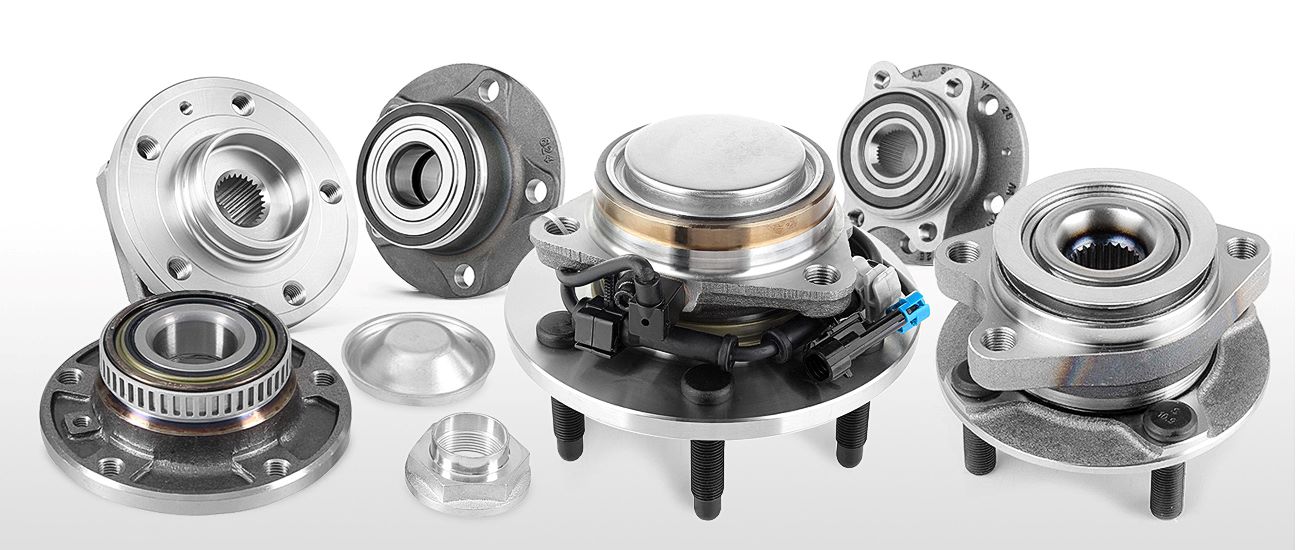
A short history of integration
The wheel hub's history over four decades is a history of parts merging. What began as loose bearings in a hub became a cartridge, then a flanged unit, then a unit with the wheel-speed sensor inside, then a unit that also carries the driveshaft joint. The catalogue calls these Gen 1, Gen 2, Gen 3 and Gen 4, and the generation labels are not marketing — each step changed what a replacement consists of, and therefore what an order must specify.
The labels also mark a change in who holds the knowledge. With Gen 1, the knowledge sat in the workshop: a fitter set the bearing's clearance by hand and felt, and a good fitter's judgement was part of the part's service life. With each later generation the knowledge moved into the part itself — clearance set at manufacture, sensing built in, joint pre-assembled — and the workshop's skill moved outward, to identification and diagnosis. Suppliers sit in the same current: the further the parc moves up the generations, the more a supplier is paid for knowing which part, and the less for merely having parts.
Gen 1: the cartridge
Gen 1 is the bearing on its own: inner ring, outer ring, cage and rolling elements, pressed into the knuckle and retained there. The wheel flange and the hub are separate parts of the car. Gen 1 survives because it is simple, cheap in piece price, and serviceable anywhere with a press — and because a large older parc was built with it. Its cost is workshop time and the skill the press work demands.
Gen 2: the flange joins the bearing
Gen 2 integrates the mounting flange into the bearing's outer ring. The unit now bolts to the knuckle, the press leaves the job, and the bearing's internal clearance is set at manufacture rather than by the fitter. For ordering, Gen 2 is where 'a bearing' becomes 'a unit': the OE number names the whole assembly, and the flange pattern joins the bore and width as fitment facts.
Gen 3: the sensor moves in
Gen 3 integrates the ABS sensor. This is the step with the sharpest ordering consequence, because the unit acquires an electrical identity on top of its mechanical one. Two units can share a flange pattern and differ in the sensor; fitted wrongly, the car has no wheel-speed signal on that corner and the ABS and stability systems fault. Gen 3 orders therefore always carry the sensor statement, and this site's gen-3 series page exists to make that statement routine.
Gen 4: the joint arrives
Gen 4 integrates the constant-velocity joint, bringing the driveshaft's interface into the hub unit. It is the least common of the four in the aftermarket parc and the most application-specific. The catalogue describes it as part of the hub family, and orders are matched by OE number from the family listings.
| Generation | Integrated | Replacement is |
|---|---|---|
| Gen 1 | Bearing only | A press-in cartridge |
| Gen 2 | + flange | A bolt-on unit |
| Gen 3 | + ABS sensor | A bolt-on unit with a signal to match |
| Gen 4 | + CV joint | A unit with the drive interface included |
The cost of ignoring the generation
Generation errors are the hub range's expensive errors because they are discovered late. A Gen 2 unit shipped against a Gen 3 application travels, clears, and reaches a fitting bench before anyone learns the car has no wheel-speed signal. The return freight on a hub unit is not trivial, and the workshop's lost ramp time is worse. Against that, the generation question costs one line on an inquiry. Every safeguard in this catalogue's hub pages — the separate series pages, the sensor tables, the comparison guide — exists to make that one line routine rather than remembered.
There is a subtler version of the same error: two units of the same generation that differ in the sensor's connector or the flange's stud count. The OE number carries those details, which is why the number, and never the photograph, is the matching instrument for this family.
What workshops notice across the generations
Fitters who work across the parc feel the generations as a change in their own job. Gen 1 work is press work: slower, more skilled, and harder on the knuckle if it goes wrong, but the parts are cheap and the failure modes are visible. Gen 2 and Gen 3 work is faster and more predictable — the unit either matches the car or it does not — and the skill moves from the press to the identification: reading the old unit, stating the generation, checking the sensor. Gen 4 adds the driveshaft to the job and rewards workshops set up for driveline work.
That shift explains a market pattern distributors notice: as the parc's centre of gravity moves from Gen 1 to Gen 3, the bearing order moves with it from codes to applications, and the supplier conversation moves from price per piece to accuracy per line. A catalogue organised by generation, like this one, is simply the map of that movement drawn in advance.
The generations also explain why 'one hub shelf fits all' advice fails. A factor whose parc is young holds mostly Gen 3 lines and can treat Gen 1 as a code-order sideline; a factor serving an older, price-sensitive parc lives on Gen 1 and Gen 2 and needs the codes deep. Both are hub specialists; their shelves barely overlap. Reading a market's generation mix — from the vehicles actually being repaired, not the vehicles being sold — is the first stocking decision in this family, and it precedes every question of brand, pack or price.
What this means for a stocking list
A distributor's hub shelf is really four shelves wearing one label. Stocking decisions split by generation: Gen 1 by DAC code groups, Gen 2 and Gen 3 by application, with Gen 3 lines carrying the sensor note so counter staff ask the question before the part leaves. The generation structure is also why this site's hub family is organised the way it is — family first, generation second, number last — because that is the order in which fitment questions are actually settled.